Beetroot, carrot, kiwi & ginger juice

Posted in: DF, LF, S, SF, Uncategorized, V, WF

I’m going to level with you: making veggie juice is a faff and your kitchen will resemble a war zone. I think it’s important you’re armed with the facts. For this very reason (and in the interests of keeping my job) I make a 3 ltr batch at the weekend, freezing 250ml bottles for  morning shots. On the plus side, it’s quite therapeutic, systematically feeding mounds of goodness into a machine which instantly produces an elixir of health. And my skin and energy levels are rejoicing.

Beetroot,-carrot,-apple,-kiwi-&-ginger-juice

Makes: 3 ltrs

Ingredients

1.4kg carrots, sprout end removed
2kg apples / 18 apples, halved
14 kiwi, rough end removed
300g ginger, chopped 2″ pieces
500g beetroot, halved with stalks removed

Veg-juice-ingredients

Method

Soak fruit and veg in water with a tablespoon of vinegar for 10 mins to remove any wax and chemicals. Line the juicer bin with a bag for slightly less mess; this way you can throw the waste straight into the rubbish. Give or take…

Most veggies can go in your juicer whole, I tend to remove the particularly tough bits and drop veg into the feeder in stages as my juicer appears not to be fully up to the task.

Veg-juice-health

Kiwi is an addition I wouldn’t do without; it adds body and a tangy smoothness that brings everything together. It’s also packed with Vitamin C.

Making-veg-juice

Keep beetroot till last, unless you want red dye on EV-ER-Y-THING. Pour juice through a sieve to remove any pulpy foam.

Decant into bottles and keep in the fridge for a day or freeze.

Juicers don’t come cheap:

At least not the decent ones and if you find this is something you’re into, you’ll soon feel compelled to invest more pennies into an uber version. Amazon has a wide selection, including the following:

Sage (by Heston Blumenthal) Nutri Pro was recently recommended to me on the basis it does’t heat up. Think Cold Pressed, which preserves the ingredients’ nutrients, apparently. If it’s good enough for tech chef Heston…

Breville have lots of middle of the road options to start you off.

Ricotta, pea & tomato pesto salad

Posted in: LF, S, SF, WF

A super quick (and low in saturated fat, by the way) supper for your salsa.

Ricotta, pea & tomato pesto salad. Wholesome Seduction

Feeds 2

Ingredients

2 handfuls salad leaves: Chard, herbs, spinach & rocket all work
2 tbsp peas. Frozen are fine, just run under tepid water to de-frost
1 tbsp buffalo ricotta, crumbled
1 tbsp tomato salsa (mixed with yoghurt, half and half is good)
1 dsp toasted pine nuts

Method

  1. Dry fry the pine nuts in a frying pan until they begin to brown. Approx. 2 mins, tossing midway.
  2. In a serving dish or on two separate plates, pile the ingredients in the order listed above.

Serve as a side salad or with roast chicken or crusty bread as a light supper.

151 KCALS PROTEIN 6.6g FAT 11.2g SAT FAT 2.4g CARB 6.4g OwS 4.4g SALT 0.1g


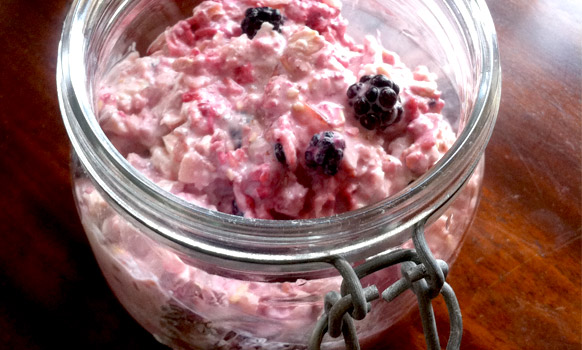
Bramble Bircher

Posted in: S, SF, V, WF

Make the most of the last of our brambles and Scottish raspberries before we hit the winter months of nothing but apples and pears.

We’re particularly attached to the contrast of flavours and textures in this dish: tart berry and grated apple against crunchy seeds and creamy yoghurt.

The slow release energy helps us feel fuller for longer and the fact it’s made almost entirely from Superfoods, keeps us coming back for more.

Ingredients

2 apples, grated
8 tbsp oats
5 tbsp natural bio yoghurt
1/2 dsp agave or 1 of honey, or to taste
4 tbsp apple juice
2 tbsp toasted seeds from The Larder
5 tbsp brambles / blackberries (or frozen raspberries)

Method

  1. In a bowl, mix all ingredients in the order listed above. You may want to up the honey or agave, we can tend to under sugar.
  2. Gently fold through the brambles, taking care not to mash – we’re aiming for raspberry ripple as opposed to lilac blamange.
  3. Transfer to a serving dish or individual bowls and enjoy.
  4. Best eaten within a couple of days.

If making in advance, frozen berries are almost better than fresh as they hold their shape when added and melt into the mix by the time you scoop it out in the morning.

Seasonal Seducer of the month: Blackberries / Brambles

Posted in: Uncategorized

MOST ATTRACTIVE FEATURES

Vitamin C, vitamin K, phytoestrogens, allagic acid, fibre, magnesium… A blackberry (or bramble in Scotland) ticks all the boxes, it would seem.

WHY WE FELL IN LOVE

Don’t let those prickles put you off. We just had to get to know this berry a bit better and every inch of us was won over. Our skin loves the ultraviolet protection provided by its ellagic acid. Our immune systems love the vitamin C (one cup is 50% of our daily recommendation). And our stomachs love the anti-inflammatory qualities.

Then there are phytoestrogens to help reduce food cravings and vitamin K to to aid calcium absorption and keep our blood clotting properly. But it doesn’t end there. Even the leaves are good: make them into tea and they’re said to reduce inflation in our mouths and throats.

Seasonal Seducer: Asparagus

Posted in: Uncategorized

MOST ATTRACTIVE FEATURES
Full of folate, inulin, fibre, vitamin A, B and K, GSH and potassium. Empty of fat, cholesterol and sodium.

WHY WE FELL IN LOVE
Oh where to start! We’d always been attracted to asparagus. There was the folate that reduces our inflammation and lowers the risks of birth defects and cancer, the potassium that helps us to detox, the vitamin K that helps us prevent osteoporosis and osteoarthritis, and the combination of all these that slows the signs of aging.

Then, as if all that wasn’t enough, we learnt about inulin. Inulin is a prebiotic that isn’t digested until it reaches our large intestine where it feeds those friendly bacteria (like Bifidobacteria and Lactobacilli): leading to better nutrient absorption, lower risks of allergy, and a lower risk of colon cancer too. Some say it’s just the shape that makes this veg an aphrodisiac…we say it’s what’s inside that counts.

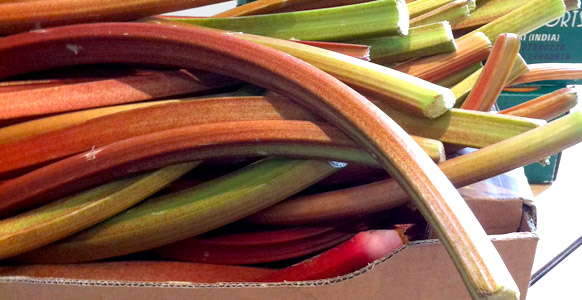
Seasonal Seducer: Rhubarb

Posted in: Uncategorized

MOST ATTRACTIVE FEATURES
Anti-oxidant, anti-inflammatory and anti-allergy. Oh, and the Chinese think it can help to cure gastric cancer.

WHY WE FELL IN LOVE
We’ve got nothing against apples and pears, but after months of them being the only fruit in season, we always get a bit excited when rhubarb time comes around again. The fact that it’s really a vegetable doesn’t dampen our enthusiasm one bit. But, whilst change is always good, that’s not the only reason we love rhubarb. Taking a leaf out of the Chinese book (they’ve been using it for centuries in their herbal medicine), we love that it can sooth our allergies and reduce our inflammation too.