Seasonal Seducer: Lamb

Posted in: Uncategorized

MOST ATTRACTIVE FEATURES

Protein, Palmitoleic acid, zinc, iron, B12 and carnitine.

WHY I FELL IN LOVE

For a while there poor lamb got itself a bit of a reputation. But having shed a bit of fat in the last decade or two, it’s coming into its own. I fell for its unique levels of carnitine (nothing else quite matches it for this). Carnitine is the amino acid that our bodies use to generate energy from fatty acids, making our hearts happy.

Seasonal Seducer: Aubergine

Posted in: DF, LF, S, SF, Uncategorized, V, WF

Most attractive features

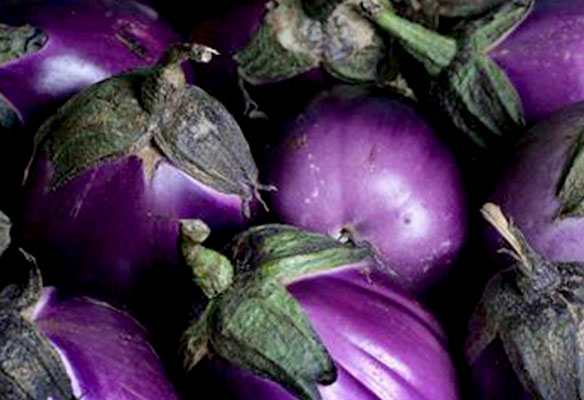
This berry (yup) is a great source of fibre, B1 and B6. It’s an impressive antioxidant and, it’s purple. I quite like purple.

Aubergine-Seasonal-Seducer

Why I fell in love

First off, there’s the way it looks on our dishes. A splash of purple in a sea of green. But it has more to offer – dietary fibre, B1, B6, potassium, copper, magnesium, manganese, phosphorus, niacin, folic acid… and nasunin. Nasunin is one of the most potent antioxidants and free-radical scavengers out there. So we’re talking cancer fighting, cholesterol lowering and diabetes managing. And it’s purple. I really do like purple.

Seasonal Seducer of the month: Blackberries / Brambles

Posted in: Uncategorized

MOST ATTRACTIVE FEATURES

Vitamin C, vitamin K, phytoestrogens, allagic acid, fibre, magnesium… A blackberry (or bramble in Scotland) ticks all the boxes, it would seem.

WHY WE FELL IN LOVE

Don’t let those prickles put you off. We just had to get to know this berry a bit better and every inch of us was won over. Our skin loves the ultraviolet protection provided by its ellagic acid. Our immune systems love the vitamin C (one cup is 50% of our daily recommendation). And our stomachs love the anti-inflammatory qualities.

Then there are phytoestrogens to help reduce food cravings and vitamin K to to aid calcium absorption and keep our blood clotting properly. But it doesn’t end there. Even the leaves are good: make them into tea and they’re said to reduce inflation in our mouths and throats.

Seasonal Seducer: Pumpkin

Posted in: Uncategorized

Most attractive features
Everything! Really. Everything. From their anti-inflammatory, prostate cancer fighting seeds through their low carb, vitamin rich flesh to their decorative skin. There’s not much that can hold a candle to the humble pumpkin.

Why we fell in love
The highlight of our Halloween ball. The pumpkin has been promoted from table decoration to main meal in our lives. Vitamins A, B, C and E. Potassium, manganese, copper, magnesium, phosphorus, iron, folate, niacin, thiamine and pantothenic acid. Low salt, low carb, low fat. It’s an impressive list.

And that’s before we’ve even looked at the seeds. Ahh, pumpkin seeds. Full of iron for our blood, zinc for our skin, calcium for our bones and magnesium for our nerves. Then there’s protein and omega-3 too. It seems they love us as much as we love them.

Seasonal Seduced: Broccoli

Posted in: Uncategorized

MOST ATTRACTIVE FEATURES
Sulphoraphane, vitamin C, caretenoids, iron, folic acid, calcium, fibre and vitamin A.

WHY WE FELL IN LOVE
For some people, it’s the strength of its iron that wins them over. For us though, it’s the sulphoraphane that stole our hearts. The cancer fighting powers it provides demand our respect and keep us coming back for more.

Seasonal seducer: Elderflower

Posted in: Uncategorized

MOST ATTRACTIVE FEATURES
Flowers, flowers, flowers!

WHY WE FELL IN LOVE
Now, we hate to sound shallow, but Elderflowers first caught our eye with their looks. Initial contact made, we soon discovered there’s much more than pretty petals to this plant. We’re talking therapeutic rumours here. Elderflowers are believed to reduce fever, boost our immune systems, soothe our respiratory systems, help with ear infections and promote general healing. Oh, and they taste like summer too.

Saving the world, one recipe at a time.

Posted in: Uncategorized

There’s an awful lot of information to take in about the humble fish. We’ve trawled through it (sorry…) and we think we now have a better understanding of what’s going on.

It seems clear that things aren’t well in the underwater world. There’s more radiation, more plastic, more chemicals and more oil. The only thing that there is less of, it appears, is fish. Here in Europe, we’re fishing so fast, supplies can’t keep up. The fish can’t reproduce quickly enough to fulfil our appetites. Quite simply, the ones that make up most of our weekly supermarket buys are running out.

And the problems don’t end there. The methods we use to catch our dinner make things worse. Huge trawl nets capture more fish than they need (or are allowed to bring ashore) – and these are just thrown back. Dead. At the moment, half the fish caught in the North Sea alone is thrown back this way; with young fish making up a scarily high percentage. It doesn’t bode well for the future.

As if all this wasn’t enough, as well as catching too many, we’re often catching the ‘wrong’ sorts. ‘Fish aggregation devices’ (FADs – a kind of floating raft in the sea that certain fish (especially tuna) are attracted to), are a key example. They attract more than the tuna they are aimed at – they lure in turtles, sharks and rays too. FADs are becoming notorious for bringing in fish that are too young and so upsetting growth rates as well as for disrupting the general migration patterns.

It’s a huge story. And not one that we can tell as well is Hugh. But what we can do is talk you through the Wholesome Seduction way of being friendlier to fish, and to be honest it’s very simple.

Eat more of it!

Try out different types, rather than sticking to poor old cod, tuna and salmon. Here’s a list of some of the most plentiful fish in our oceans:

Coley, pollack, pouting, sea bass, lemon sole, gurnard and Dabs. Herring, mackerel, sardines, kippers, tilapia and whiting.

We think it’s a pretty inspiring list. Who knew that saving the world would be so tasty?

Check back on Friday for a weekend BBQ recipe for Mackerel. In the meantime, find out more about Hugh’s Fish fight.


Back to the Future, terrifying technologies & fish fights.

Posted in: Uncategorized

Returning to the UK after months in Asia, we’ve found ourselves in a science fiction story. Kindles (both of us had to ask our Mums to explain these to us), iphone 4 (with 5 on the way) and intelligent technologies that follow you around your home (did nobody else see the 1992 film, Homewrecker? No? Never mind).

Having spent months in India, where hot water and electricity were a luxury, it’s all been a little overwhelming. The western world feels like an alien place right now.

Let’s talk food (after all, this is a food blog). Our first trips to the supermarket took our breath away. We both walked around our respective local stores with our mouths slightly open, attracting nervous glances from the other customers. And it wasn’t just the prices (friends weren’t kidding when they said things had increased in the last year or so!). It was the variety that hit us most. Butternut squash and parsnips in June? Mangetout flown in from Thailand? As they say in India, ‘everything is possible!’.

And the fish. There was so much variety! Coming from a village in the Himalayas, where the only kind of fish was the sort in a tin, this was a welcome sight for Nadine. But it did get us both asking questions. Wasn’t there a problem with cod still? And swordfish, that was in danger too wasn’t it? Perhaps this modern world we’d returned too had fixed the problems, we thought…

As a girl with a little too much time on her hands, Nadine decided to investigate. Clare pointed the direction to Hugh’s Fish Fight and the mind blowing discovery that half the fish caught in the North Sea are thrown back, dead. Mum Sharkey added food for thought (sorry), with a passing comment about nuclear fish in the oceans around Japan. It crossed our minds that perhaps we’d returned to a different kind of Sci-Fi movie altogether.

But it didn’t end there. It turns out that there’s food dye in our farmed salmon. That the EU is in trouble with Greenpeace and local African fishermen for ‘stealing’ their fish, destroying their ecosystems and damaging their livelihoods. That it takes more quantities of mackerel to feed farmed fish than the farms produce in return. And that turtles and rays are under threat from tuna fishing methods.

Quite frankly, it’s a little frightening.

But at least it’s not being ignored. Everyone from Prince Charles to Elle McPherson have got involved with the Project Ocean campaign at Selfridges on London’s Oxford Street, while Stephen Fry and Richard Branston are firm supporters of Hugh’s Fish Fight. There are petitions to sign all over the place. And change is happening! Tesco and Princes have changed their tuna for a start.

All of which was a bit of a relief to find out. So, leaving the big gestures and political change to those with a bit more influence, we decided to set about finding out what little things we can do to make a difference.

Firstly, you could sign some petitions. These are a good place to start:
http://www.fishfight.net/
http://www.greenpeace.org.uk/fishfigh

Secondly, if you have a little spare cash, make a donation:
http://www.selfridges.com/en/StaticPage/ProjectOcean/#/donation

Thirdly and, in our minds most importantly, change the fish you eat. Start simply:
Cut out cod, munch on mackerel, limit yourself to line caught tuna, and make sure it’s MSC certified if possible.

Over the next few weeks, we’ll be running a series of posts on sustainable fish and fish farming to help you make your own decisions about what to eat and what to avoid. We’ll also throw in some of our favourite fish recipes.

Start now by buying MSC certified salmon and making Tamari & Sesame Wild Salmon with Purple Sprouting Broccoli.

Seasonal Seducer: Asparagus

Posted in: Uncategorized

MOST ATTRACTIVE FEATURES
Full of folate, inulin, fibre, vitamin A, B and K, GSH and potassium. Empty of fat, cholesterol and sodium.

WHY WE FELL IN LOVE
Oh where to start! We’d always been attracted to asparagus. There was the folate that reduces our inflammation and lowers the risks of birth defects and cancer, the potassium that helps us to detox, the vitamin K that helps us prevent osteoporosis and osteoarthritis, and the combination of all these that slows the signs of aging.

Then, as if all that wasn’t enough, we learnt about inulin. Inulin is a prebiotic that isn’t digested until it reaches our large intestine where it feeds those friendly bacteria (like Bifidobacteria and Lactobacilli): leading to better nutrient absorption, lower risks of allergy, and a lower risk of colon cancer too. Some say it’s just the shape that makes this veg an aphrodisiac…we say it’s what’s inside that counts.

Green Curry!

Posted in: S

No, we’re not talking Thai food. We’re talking environmentally friendly spices. In particular, coriander seeds, cumin and turmeric. These three curry house favourites are topping the list of greenhouse gas reducers.

Research carried out at Newcastle University shows that feeding them to sheep reduces the levels of methane released significantly. Coriander seeds were the winner (reducing methane production by 40%), with turmeric a close second (30% drop) and cumin coming in third (22%).

“What? How?” We hear you cry. It’s all thanks to the anti-bacterial properties of these three spices. They kill off the bad bacteria in the gut while letting the good bacteria (you know, the ones those TV ads promise – but, in our opinion, fail – to love) live. Less naughty bacteria = less gas.

It’s great news for the environment. Great news for our noses. And the perfect excuse to whip up an aloo gobi! Sometimes following the flock is no bad thing. Baaa.

Find out more: http://www.ncl.ac.uk/press.office/press.release/item/spice-leaves-sheep-smelling-sweeter